
2026 Annual Pet Parasite Forecasts
VECTOR-BORNE PATHOGEN RISK: WHAT TO EXPECT IN 2026
The Companion Animal Parasite Council has released annual forecasts for canine Lyme, ehrlichiosis, anaplasmosis, and heartworm disease since 2012. The forecasts highlight the dynamic nature of vector-borne diseases and are designed to help veterinarians assess disease risk in their local and surrounding areas.
The 2026 forecasts are designed to predict what veterinarians and laboratories will find when testing dogs for these pathogens. Over the course of the year, CAPC updates its online parasite prevalence maps with true results, which can be found at www.capcvet.org. Historically, forecast predictions have exceeded >94% accurate in estimating the true prevalence of these four diseases across the United States.
Many factors influence the risk of vector-borne diseases, including complex interactions between host, vector, pathogen, and the environment. Because these interactions are dynamic, changes in disease risk are rarely linear or predictable. Human activities such as changes in land use, reforestation, relocation of animals, and increased movement of people and pets can rapidly shift transmission risk. Concurrently, climate change, alterations in wildlife densities and distributions, and expanding vector habitats continue to reshape risk landscapes. Recent trends in warming temperatures and extreme weather events have accelerated seasonal activity and geographic expansion of many vectors, reinforcing the need for adaptive surveillance. For these reasons, ongoing, comprehensive monitoring of vector-borne diseases affecting both animals and humans remains essential.
Mosquitoes and ticks remain the primary vectors of diseases of veterinary and human importance in the United States, but other arthropods are also increasingly relevant to both animal and public health. Year-round, routine surveillance of both vectors and hosts is essential to accurately assess evolving risk.
In 2023, multiple cases of locally acquired human malaria were reported in Florida, Texas, Maryland, and Arkansas, the first such transmission in nearly two decades, illustrating how competent mosquito vectors can sustain local transmission of a disease once thought limited to travel-associated cases in the U.S. Additionally, a locally acquired chikungunya virus infection was identified in New York in 2025, signaling expanding activity of arboviruses once largely restricted to tropical regions. Surveillance in 2025 also reported continued activity of dengue virus in parts of Florida and Texas, and persistent West Nile virus circulation across many states, reinforcing the dynamic nature of vector-borne pathogen presence.
In companion animals, emerging pathogens further highlight evolving risk landscapes. Research have recently confirmed a novel tick-borne spotted fever group Rickettsia species, Rickettsia finnyi, infecting dogs in the southeastern and midwestern U.S. with clinical signs resembling Rocky Mountain spotted fever. This new species was first detected in dogs in 2018 and has since been identified in additional canine cases and researchers suspect it may be transmitted by lone star ticks, whose range is expanding across large portions of the country. Although not yet detected in humans, its existence underscores the need for expanded surveillance of tick-borne pathogens that could impact both dog and human health.
Other vector-borne threats, such as Chagas disease, caused by Trypanosoma cruzi, also illustrate the dual public-animal health relevance of surveillance. Triatomine “kissing bugs” capable of transmitting the parasite are present in many southern states, and both locally acquired human cases and canine infections have been described, reinforcing that pathogens once viewed as imported ricks can have established transmission cycles domestically.
To truly understand and respond to the evolving risk of vector-borne diseases for both public and companion animal health, surveillance systems must extend beyond infrequent check-ins and instead be continuous, geographically broad, and integrated across seasons. Each year, over 10 million diagnostic test results per vector-borne disease are reported to CAPC from across the United States. As a result, the forecasts are firmly based on where dogs are testing positive for Lyme disease, ehrlichiosis, anaplasmosis, and heartworm disease. This large-scale surveillance provides a strong and grounded foundation for assessing disease patterns. While animal travel and relocation cannot be completely controlled for, most pets receive care near where they live, suggesting that broad trends in these data represent meaningful local risk.
We hope these forecasts stimulate conversations about what more we can do to lower vector-borne disease risk through education and prevention. While routine diagnostic testing is still the best way for a clinic to understand its local risk, these maps can help veterinarians see where their preventative programs are working, where gaps may exist, and where risks might be emerging, especially for pets that travel. At the core of vector-borne disease prevention is keeping vectors such as ticks and mosquitoes away from pets and or killing or repelling them before they can spread infection. That’s why consistent, year-round use of products that kill and/or repel ticks and mosquitoes is a foundational piece of any comprehensive parasite control program.
Lyme Forecast
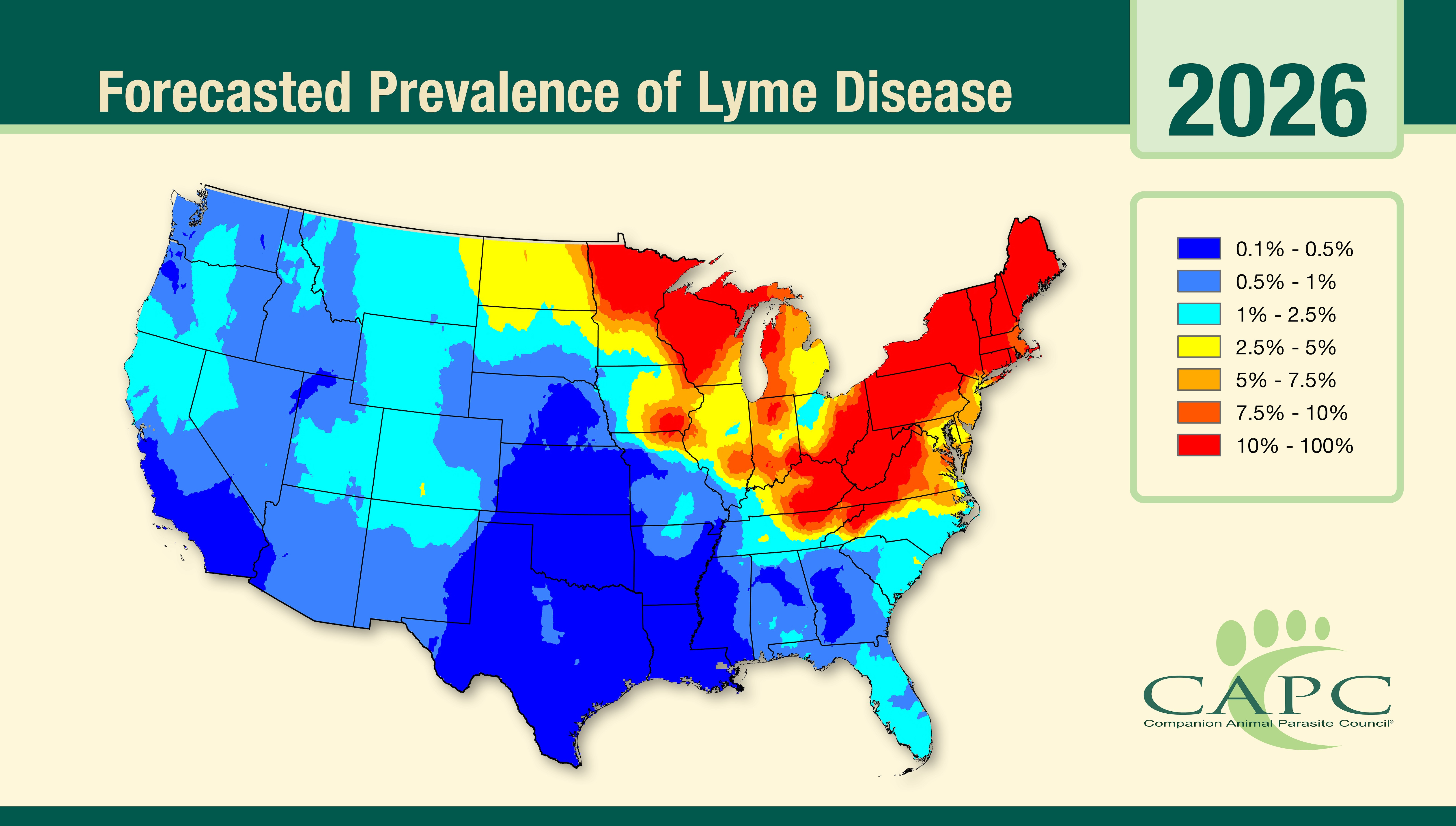
Blacklegged ticks (Ixodes scapularis in the eastern portion of North America and Ixodes pacificus in western regions of North America) are the primary vectors of Borrelia burgdorferi (the causative agent of Lyme disease [aka: Lyme borreliosis]; Note: Currently, Borrelia burgdorferi is being reclassified to Borreliella burgdorferi to better reflect the genetic differences within the Borrelia genus). The geographic range of blacklegged ticks continue to expand across North America and with them the pathogens they transmit, including Lyme disease agents. Although the highest risk of encountering blacklegged ticks remains in the northeastern and upper midwestern United States, populations of I. scapularis are increasingly established farther south, west, and north into previously uncolonized areas of Canada, exposing new human and animal populations to blacklegged tick-associated pathogens (agents of Lyme borreliosis, anaplasmosis, babesiosis, ehrlichiosis, and Powassan virus fever). Recent ecological models indicated that warming climate trends, precipitation, and habitat suitability are likely to further facilitate the northward expansion of I. scapularis in coming decades, increasing the potential range and abundance of this vector. This on-going spread, coupled with broader environmental and landscape changes, underscores the evolving public and companion animal health challenge posed by blacklegged ticks, Lyme disease, and other associated pathogens.
Lyme disease exemplifies a One Health issue, as B. burgdorferi can infect humans, companion animals, and horses. Multiple studies have shown that areas of elevated risk for dogs closely parallel regions where humans are most likely to get Lyme disease. These forecasting efforts therefore provide valuable insight not only into canine Lyme disease risk but also into the broader threat posed by other blacklegged tick-transmitted pathogens of public health importance.
- The Upper Midwest and Northeast remain high-risk regions for Lyme disease, with expanding risk across Indiana, Illinois, Michigan, and Ohio. This sustained risk is driven by abundant tick habitat, high deer densities, efficient wildlife reservoir hosts, fragmented landscape that enhance tick contact opportunities, favorable climate conditions, human behavior that increases tick contact opportunities, and long-established pathogen transmission cycles.
- Compared with historical patterns, Ohio, Kentucky, West Virginia, and parts of northern Tennessee and northwestern and North Carolina are projected to experience some of the greatest expansions in Lyme disease risk. Veterinarians in these areas should proactively (re)assess and strengthen their Lyme prevention programs before substantial increases in positive cases are seen in clinical practice.
- Elevated Lyme disease risk is expected to persist in North Dakota, eastern Montana, and northern South Dakota as spread continues westward from heavily Lyme endemic Minnesota. Contributing factors include westward expansion of the primary tick vector, I. scapularis, forested and riparian corridors that function as “tick highways”, abundant deer populations that support tick reproduction, small mammal reservoirs that maintain B. burgdorferi, warming temperatures, and increased human and pet movement. Because blacklegged ticks depend on both deer hosts and broadleaf forest habitat, westward spread is likely to follow wooded river corridors through these predominantly agricultural states.
- A higher-than-normal risk is expected to continue in Iowa, particularly in the southeast region. Contributing factors include abundant suitable habitat (especially forested travel corridors around the Mississippi River, Iowa River, Cedar River, and Des Moines River, strong deer populations, plentiful reservoir hosts (e.g., white-footed mice, chipmunks), warming climate trends, and continued spread from high Lyme incidence states including Minnesota, Wisconsin and Illinois.
- Veterinarians in historically high prevalence areas and regions forecasted to experience increasing risk should emphasize consistent, proactive tick control practices. Studies show that in highly endemic areas, Lyme vaccination in dogs can reduce both the number of positive cases and severity of disease observed in clinical practice. Because Lyme vaccination is considered risk-based, veterinarians in emerging or traditionally low-incidence regions should evaluate each patient’s risk individually. Annual testing can help monitor regional risk trends, but lifestyle factors such as travel to endemic areas or extensive time spent in wooded environments (e.g., hunting dogs), may justify additional preventative measures beyond those recommended for the general patient population.
- Even in areas where Lyme disease risk is considered low, the risk of infected tick bites is still possible. Annual screening for vector-borne pathogens, along with tick control planning, is especially important for pets that travel with their owners or are relocated from higher-risk areas. Multiple in-clinic and reference lab diagnostic options for Lyme disease testing are readily available. Effective Lyme disease control strategies include use of tick control products and vaccination, both of which must be implemented before tick exposure to be effective
Heartworm Forecast
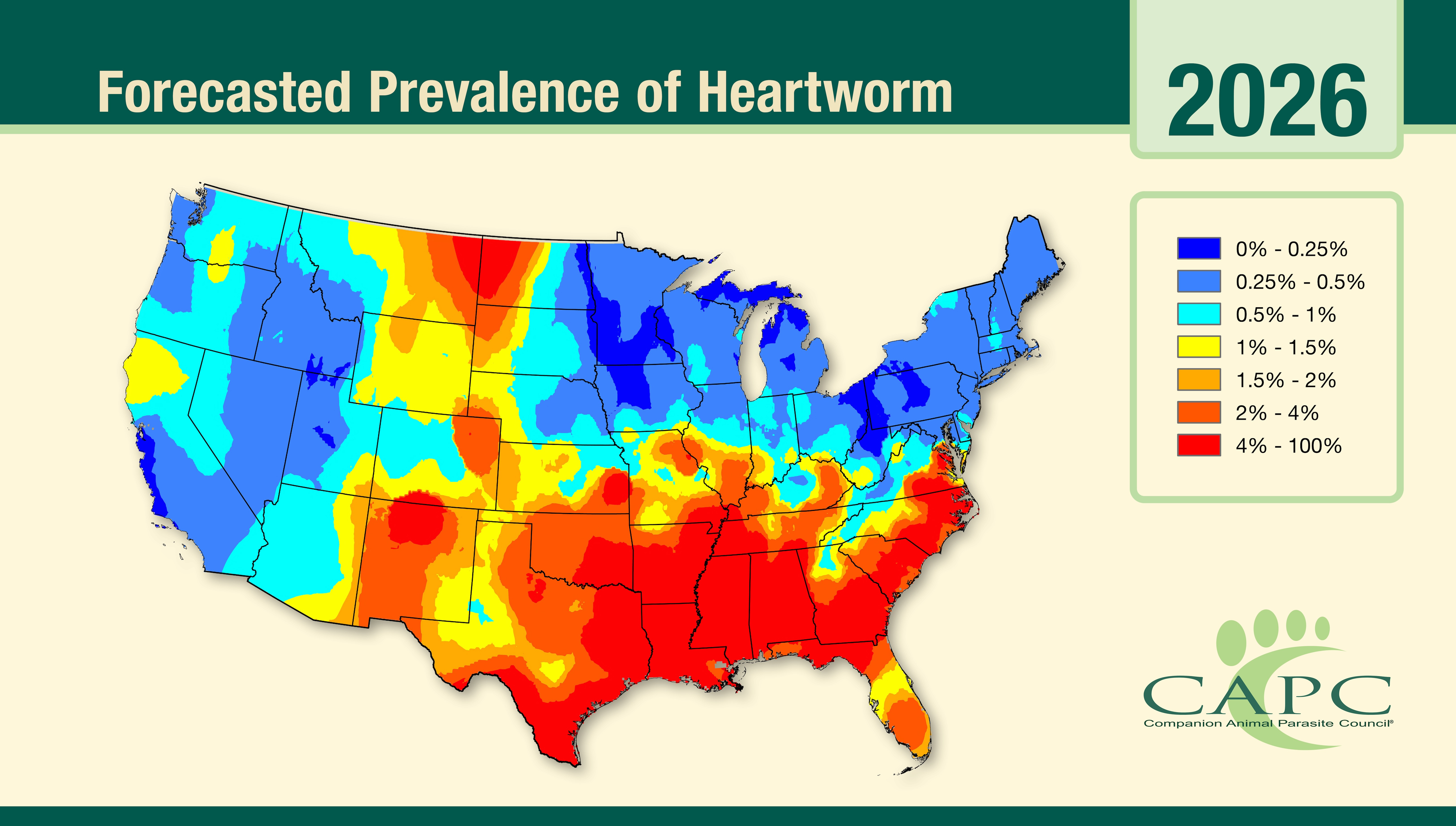
The causative agent of heartworm disease, Dirofilaria immitis, is transmitted by a variety of mosquito species. Among these are the Asian tiger mosquito (Aedes albopictus) and the yellow fever mosquito (Aedes aegypti), both of which have expanded their ranges northward in the United States. This spread has contributed to increasing heartworm risk for dogs in areas that were previously considered low-risk or non-endemic.
- The highest risk of heartworm infection is expected to remain in the southeastern United States, with continued spread northward along the Mississippi River corridor and up the Atlantic coast. This trend places much of the central and eastern U.S., from Kansas to Maryland, at increasing risk as well. Sustained high incidence in these regions is driven by climate conditions that prolong mosquito activity, highly suitable mosquito ecology, large populations of infected reservoir dogs, movement of dogs that facilitate parasite spread, urbanization that creates mosquito breeding habitats, inconsistent use of preventatives, and high transmission pressure that supports parasite strain diversity. Together, these factors reinforce one another, allowing heartworm disease to remain entrenched and, in many areas, intensify.
- Although northward expansion has not yet substantially reached the Upper Midwest (e.g., Minnesota, Wisconsin, Michigan) or much of the Northeastern United States, transport of dogs from the South to urban centers in these regions poses a meaningful risk. Veterinarians in these cities should be equally prepared to diagnose, prevent, and manage heartworm disease as those practicing in traditionally high-risk areas. In this role, veterinarians are critical to slowing geographic spread, since a single heartworm-positive dog can increase local transmission risk (suitable mosquito species do exist in these areas to support local transmission). Prompt diagnosis and appropriate treatment of infected dogs can help prevent heartworm from becoming established in newly affected areas.
- Consistent pockets of elevated heartworm risk are expected to persist in New Mexico, Colorado, Wyoming, Montana, and North Dakota. Although these regions have not traditionally been considered endemic for heartworm disease, veterinarians are diagnosing infections more frequently than expected. Contributing factors include the establishment of competent mosquito vectors, warmer temperatures that prolong mosquito activity and increase transmission potential, urban water use that creates mosquito breeding habitats, movement of infected dogs introducing the parasite to new areas, rural and suburban development that supports mosquito breeding, gaps in preventive use in areas perceived as low-risk, and growing human and pet populations. This trend highlights the importance of routine heartworm testing in all dogs to better assess local prevalence and accurately define regional risk.
- Northern California continues to experience increasing heartworm risk from the northern coast inland through the Central Valley. This region supports abundant mosquito species capable of transmitting heartworm, along with growing wild canid populations (e.g., coyotes) that may serve as reservoirs. Additional contributing factors include warmer temperatures that lengthen the transmission season, introduction of heartworm through importation of infected dogs, urban and suburban water use that promotes mosquito breeding, gaps in preventive use in areas perceived as low-risk, and wildlife-rural interfaces that increase contact between mosquitoes and dogs. Because reducing mosquito exposure and infection in wildlife is not feasible, veterinarians should focus on protecting individual pets and reinforce the importance of consistent year-round heartworm prevention.
- Clients should be reminded that changes in local environments can create heartworm risks that may not be reflected in broader regional forecasts. Veterinarians are encouraged to emphasize that “low risk” does not mean “no risk,” particularly for a preventable and potentially fatal disease such as heartworm.
Year-round use of preventive products remains the most effective way to provide comprehensive protection against internal and external parasites. Annual testing is recommended to monitor compliance and ensure continued preventive efficacy.
Ehrlichia spp. Forecast
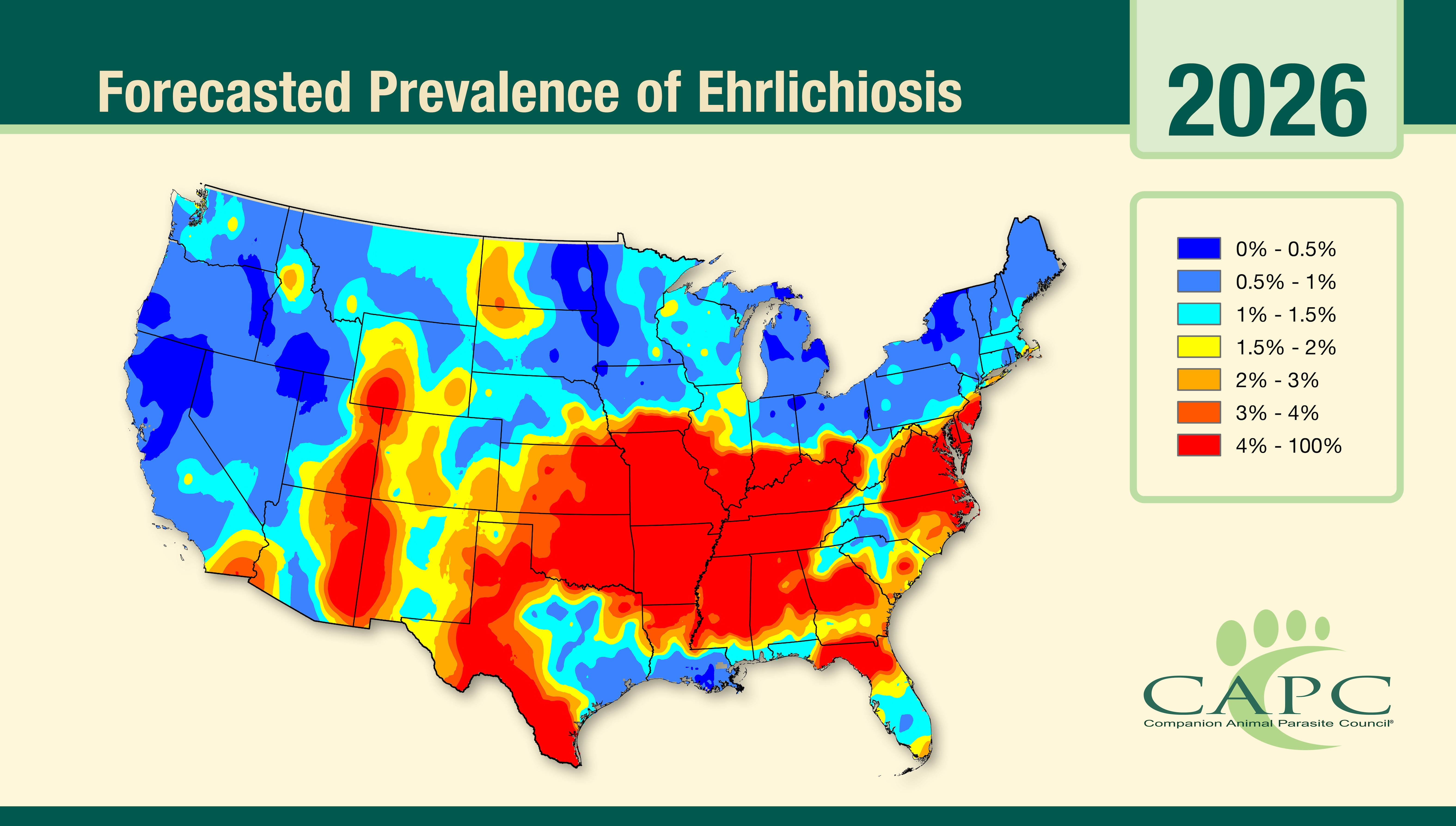
Ehrlichiosis remains an important disease of concern in dogs across the United States. The data used to generate these forecasts combines multiple Ehrlichia spp. that infect dogs, including E. chaffeensis and E. ewingii, transmitted by the lone star tick (Amblyomma americanum), and E. canis, transmitted by the brown dog tick (Rhipicephalus sanguineus). As a result, several distinct geographic patterns appear on these maps, each potentially reflecting the distribution of the different tick vectors and Ehrlichia spp. One notable pattern across the central United States, from Oklahoma and Kansas to North Carolina and Virgina, parallels areas where the CDC reports higher numbers of human ehrlichiosis cases, which are also associated with the lone star tick. Similar to other tick-borne diseases, CDC data on human ehrlichiosis show a continued long-term increase in reported cases, marked summer seasonality, and an expanding geographic distribution. This overlap underscores the shared risk of tick-borne disease for both people and pets, reflecting the environments and lifestyles they share.
- The forecasted risks of Ehrlichia spp. in dogs remains high throughout the southeastern, southwestern, south-central, and coastal Atlantic states.
- In the eastern United States, increased detection of Ehrlichia infections in dogs reflects a combination of ecological, vector, and surveillance factors. Contributing factors include expansion of the lone star tick, abundant wildlife and domestic hosts, climate trends that prolong tick activity and transmission season, movement and relocation of dogs, improved diagnostic testing and surveillance, increased tick risk in suburban and peri-urban areas, and the presence of multiple Ehrlichia species shaping regional patterns.
- Compared with earlier trends, increasing numbers of Ehrlichia spp. seropositive dogs are forecast in several western states including Arizona, New Mexico, Colorado, Utah, and Wyoming. Because the brown dog tick (R. sanguineus) is more prevalent in these areas than the lone star tick, E. canis is likely the predominant Ehrlichia species affecting dogs here. The brown dog tick thrives in hot, dry climates and is well adapted to living in and around human structures such as homes, kennels, and shelters. It can complete its entire lifecycle indoors, allowing infestations and transmission to persist year-round. Outbreaks of canine monocytic ehrlichiosis caused by E. canis have been well-documented in the Southwest, particularly in areas with large free-roaming dog populations or dense housing.
- Continued northward expansion of the lone star tick is increasing the risk of ehrlichiosis in historically non-endemic areas of the Upper Midwest (e.g., Minnesota and Wisconsin) and New England (New York, Massachusetts, Vermont, New Hampshire, and Maine). As this vector expands its range, the dominant Ehrlichia species affecting dogs in these regions are likely E. chaffeeensis and E. ewingii, which are both transmitted by the lone star tick.
- Because multiple tick species transmit Ehrlichia spp. to dogs, risk is widespread across the United States, and in many areas, transmission can occur year-round. This underscores the importance of routine testing and consistent, year-round tick control for dogs, regardless of regions.
- Dogs that test positive for antibodies to Ehrlichia spp. may remain clinically normal (common for E. chaffeensis and E. ewingii but not E. canis). At a minimum, however, a positive result indicates a tick bite of sufficient duration for transmission has occurred, and veterinarians should use this information to reinforce the importance of consistent, year-round tick control for dogs in their practice.
Anaplasma spp. Forecast
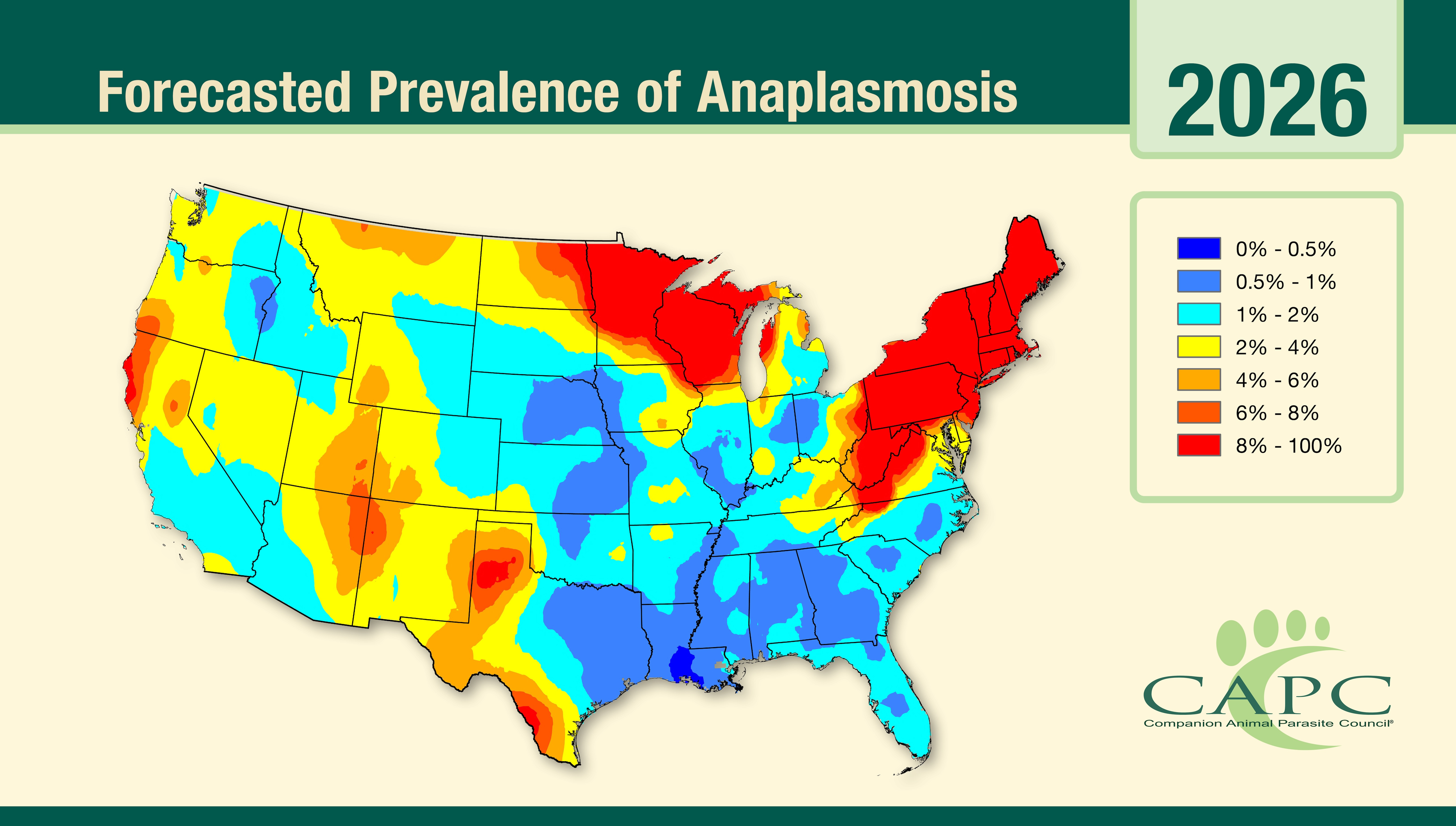
Similar to Ehrlichia spp., the Anaplasma forecast map incorporates data from multiple Anaplasma spp. that infect dogs, including A. phagocytophilum, transmitted by the blacklegged tick (Ixodes scapularis), and A. platys, transmitted by the brown dog tick (Rhipicephalus sanguineus). The distinct geographic patterns of these infections underscore the importance of understanding local tick populations and the tick-borne disease risks specific to your region.
- The seroprevalence of Anaplasma phagocytophilum in dogs continues to follow the southward and westward expansion of the blacklegged tick (Ixodes scapularis). As this tick establishes in new areas, canine challenge risk to A. phagocytophilum increases alongside it. Because A. phagocytophilum share the same vector and Borrelia burgdorferi, areas experiencing rising Lyme disease risk are often seeing parallel increases in canine anaplasmosis.
- The risk of anaplasmosis remains high for dogs in the Northeastern United States and Upper Midwest, where in some practices the number of dogs testing positive for anaplasmosis now exceeds those testing positive for Lyme disease. Elevated and increasing detection in these regions reflects expanding and dense blacklegged tick populations, abundant wildlife reservoirs, high deer densities, climate trends that prolong tick activity, suburbanization that increase dog-tick contact, and improved testing and awareness.
- Forecasts continue to predict an increased risk for dogs in eastern Ohio, Kentucky, and Tennessee, as well as much of Virginia and North Carolina.
- Anaplasma phagocytophilum also represents a growing risk to dogs along the West Coast. Expanding and increasingly established populations of the western blacklegged tick (Ixodes pacificus) from northern California through Oregon and into Washington are contributing to a rising canine risk. Contributing factors include favorable coastal and forested habitats that support tick survival, abundant wildlife hosts such as deer and small mammals that maintain the pathogen in nature, and climate trends that extend seasonal tick activity. In addition, increasing suburban development into wooded and peri-urban areas is bringing dogs in closer contact with tick habitat. Because A. phagocytophilum shares ecological patterns with Lyme disease in the western U.S., veterinarians in these regions should remain vigilant and emphasize routine testing and consistent tick prevention.
- Although the open landscapes of the Plains and limited forest cover can slow westward expansion of the blacklegged tick, the risk of anaplasmosis in dogs in the northern Plains states remains moderate. This risk likely stems from gradual tick encroachment as well as travel-related encounters when dogs visit higher-prevalence states such as Minnesota and Wisconsin. Veterinarians in these regions should be prepared to recommend appropriate tick prevention and diagnostic testing to protect dogs in these areas.
- The blacklegged tick has a prolonged seasonal activity pattern, with juvenile stages most active during the warm late spring/summer months and adults active in the cooler spring/fall/winter months depending on the specific region. This flexibility in seasonal questing allows the tick (and the pathogens it transmits) to establish in new areas by adjusting their activity to local climate conditions.
- In the Southwestern United States, the higher risk of anaplasmosis in dogs likely represents transmission of Anaplasma platys whose transmission is facilitated by the brown dog tick (Rhipicephalus sanguineus). The brown dog tick is uniquely adapted to hot, dry climates and life in close association with humans and dogs. Brown dog ticks and the pathogens they transmit (including A. platys and E. canis) are showing signs of expanding northward from endemic areas of western Texas, New Mexico, and Arizona into Colorado, Utah and Wyoming. Co-infections with these pathogens are common and can significantly increase overall disease severity in affected dogs. High-density dog populations, including free-roaming and community dogs, further support transmission by providing a continuous host supply for ticks. Movement of dogs between homes, shelters, and across state lines can introduce both infected dogs and ticks into new environments, seeding local infestations. Because the transmission cycle of A. platys is closely tied to domestic dog environments rather than wildlife ecology, effective prevention depends heavily on year-round tick control for dogs and, when infestations occur, environmental treatment of infected premises.
- Although these this forecast map focuses on the risk of anaplasmosis in dogs, the anaplasmosis risk in the southwestern United States may serve as a proxy for the risk of other brown dog tick transmitted pathogens, particularly Rickettsia rickettsii, the agent of Rocky Mountain spotted fever (RMSF). Routine surveillance for Anaplasma platys challenge in dogs can therefore serve as a useful indicator of brown dog tick activity and the potential for RMSF in a given area. The CDC reports that Arizona continues to have some of the highest RMSF incidence in the country, with outbreaks closely linked to heavy brown dog tick infestations in communities. Consequently, effective tick control in these regions may help reduce the risk of both anaplasmosis and RMSF in dogs, while also lowering the transmission risk for humans, highlighting the important One Health connection between canine surveillance and human disease prevention.
Year-Round Protection and Annual Testing
The best way to protect your patients is to advise owners of the importance of year-round parasite prevention, even during the winter months, and routine testing. You can use the CAPC Parasite Prevalence Maps to support your recommendation by underscoring the risks in your area and in regions of the country your clients may travel with their pets. It is also important to emphasize the importance of compliance and using products correctly.
CAPC Parasite Prevalence maps and Forecast maps are validated tools for increasing client willingness to engage in parasite prevention. Sign up to receive local alerts on parasite testing results down to the county level today by visiting the CAPC Parasite Prevalence Maps and selecting "Get Updates".
Monthly Pet Parasite Forecasts
Veterinary professionals and pet owners who want to monitor parasite activity in their county throughout the year, can also access 30-Day Parasite Forecast Maps at www.petdiseasealerts.org. These maps, developed exclusively by CAPC, provide a local forecast for every county in the continental United States on a monthly basis.
Flea Forecasts
CAPC offers a daily Flea Forecast at www.petdiseasealerts.org that displays flea activity across the United States, based on environmental conditions. The Flea Forecasts also offer a unique look at the historical movement of fleas through a video animation, showing changes in flea activity over the previous 12-month period.
The Flea Forecasts are a strong reminder to pet owners to protect pets year-round with flea control products, limiting infestations on pets and preventing establishment of flea populations in the home.
The Science Behind the Forecasts
Vector-borne disease is dynamic and ever changing, driven by multiple factors that affect the development of arthropod vectors and the pathogens they carry. Leading parasitologists work in collaboration with a team of statisticians to identify regions of the country that may experience higher parasite incidence in the months ahead. Numerous factors are analyzed, including the number of positive tests and the influence of weather patterns, vegetation indices, and human population density. Using this multi-disciplinary approach, we are leveraging everyone’s expertise to focus on a single common interest: forecasting the risk of exposure to vector-borne pathogens. While these forecasts predict the potential risk of a dog testing positive, they do not necessarily reflect the occurrence of clinical disease.
To learn more about the science behind the maps, a free review can be read here and full access to all of our manuscripts describing the methodology and fidelity of our forecasts can be found here.